Showing posts with label interview. Show all posts

Tuesday, 1 April 2014

FILM REVIEW: THE UNKNOWN KNOWN

Donald Rumsfeld in The Unknown Known. 
Spin Rummy

By Ed Rampell

Along with Michael Moore, Errol Morris is arguably America’s preeminent documentarian. Morris’ recent nonfiction films include 2003’s Academy Award winning, The Fog of War: Eleven Lessons from the Life of Robert S. McNamara and 2008’s Berlin International Film Festival Jury Grand Prize winner, Standard Operating Procedure

The former sought to explain why America went “down the same rabbit hole again” (as Morris put it during his Oscar acceptance speech) by invading Iraq through an investigation of the so-called “Mac the Knife,” who was U.S. Secretary of Defense during much of the Vietnam War. The second doc examined torture committed by Americans at Iraq’s notorious Abu Ghraib prison.

Morris’ latest documentary, The Unknown Known, is a sort of cinematic synthesis and updating of the two, as the master moviemaker focuses his “Interrotron” on Donald Rumsfeld, the man who was Defense Secretary during the Iraq War and is suspected of sharing responsibility for torturing prisoners from Abu Ghraib to Guantanamo. The Interrotron is a recording device somewhat similar to a teleprompter that enables the interview subject to appear to be making direct eye contact with the interviewer, and hence with the audience. The term, which was coined by Morris’ wife, producer Julia Sheehan, enhances the “first person” and “fly on the wall” nature of Q&As while suggesting the words “interrogation,” “interview” and -- appropriately, in Rumsfeld’s case -- “terror.”

The Unknown Known follows Rumsfeld, the Don Corleone of elite Republican politics, through his career as a four-term Congressman in the 1960s to his stints as a behind-the-scenes strings puller in the administrations of presidents Nixon and Ford, serving the latter as America’s youngest Secretary of Defense. The documentary focuses on Rumsfeld’s return to that post (by then as America’s oldest Defense Secretary) during George W. Bush’s disastrous presidency at the behest of his longtime crony, Dick Cheney. In this doc “The Unknown” becomes “Known” largely through the 20,000 memos the verbose Rumsfeld -- a psychopathic egotist way too fond of hearing the sound of his own voice -- circulated during his six years as Bush’s Pentagon hit man. Building upon what the ex-Defense Secretary dubs “snowflakes,” Morris once again goes down the rabbit hole as he follows Rumsfeld’s arrogant paper trail and creates one of the documentary’s central cinematic metaphors.

Morris is at his best when he uses filmmaking’s audio-visual language to express ideas and break the tedium of talking heads on the big screen. In 1988’s The Thin Blue Line about a Texan wrongfully convicted of murder Morris memorably, inventively enlivened the action with a slow motion crime scene reenactment featuring a flying milkshake, which provided a vital clue for the case. In The Unknown Known Morris cinematically opens up the screen with beautiful black and white time lapse cinematography of Washington, D.C. and repeatedly uses the snowflake theme to make his case against Rumsfeld and his snow job, as Rummy reads many of his memos aloud. At one point Irving Berlin’s “White Christmas” plays on the soundtrack. Another visual metaphor Morris deploys is images of the ocean, perhaps to give form to the gabby Rumsfeld’s sea of words.

Morris’ cleverest use of cinematic symbolism, however, is aural, as he overlays one track of Rumsfeld speaking over another, thereby creating the impression that the Pentagon top banana was, literally, a double talker. For instance, to sidestep the Geneva Conventions Rumsfeld refers to “detainees” instead of “prisoners of war.” Morris includes a canny clip of the 2002 press conference wherein Rumsfeld rather infamously said this about the lack of hard evidence regarding Iraq’s purported WMDs: “There are known knowns; there are things we know that we know. There are known unknowns: that is to say, there are things that we now know we don’t know. But there are also unknown unknowns – there are things we do not know we don’t know.” The title of Morris’ film is derived from this convoluted quote, which is clearly classic Orwellian “doublespeak.” (The doc’s droll, tongue in cheeky tagline is: “What you didn’t know you didn’t know.”)

At other times Morris cannily cuts from a lie Rumsfeld tells the Interrotron to footage of a previous statement by him, in order to point out self-serving contradictions. Sometimes Rummy spars with his electronic interrogator, taking issue with Morris’ use of the word “obsession” to describe his fixation on Iraq, retorting: “You like the word ‘obsession.’” At other times Rumsfeld critics may feel that the interrogator isn’t as hard hitting as he could be with the elusive subject -- Morris’ disdain for his subject has actually been far more visceral and palpable in the interviews he has given since completing his doc.

For instance, Rumsfeld’s meeting with Saddam Hussein on Dec. 20, 1983 as the Reagan regime’s special envoy to Western Asia is revisited, but Morris doesn’t press Rummy on his shaking hands and dickering with the dictator who was at the time using chemical weapons against Kurds and Iranians -- while the Bush regime used Iraq’s purported Weapons of Mass Destruction and Baghdad’s prior use of WMDs as a pretext for war. Rumsfeld, who was among the top purveyors of disinformation about Saddam’s WMDs, is predictably weasel-y when confronted about his lies regarding this matter (as he is regarding U.S. torture). When Rumsfeld ruminates upon Tariq Aziz, expressing a desire to meet with Saddam’s former Foreign Minister and Deputy Prime Minister, Morris inserts an image of written words dropping into a black pit.

Discussing Gitmo, Bagram and whether or not it was better for the U.S. to have not invaded Iraq Rumsfeld tellingly says “Time will tell,” justifying Bush administration actions by pointing out that under Pres. Obama many Bush policies are “all still there.”

Rumsfeld jokingly calls his interrogator’s final question “vicious,” as Morris inquires: “Why are you talking to me?” Rumsfeld replies: “I’ll be damned if I know.” This reviewer suspects that in addition to trying to burnish his image and put his spin on history, a main reason why Rumsfeld agreed to be interviewed for The Unknown Known is in order to sell copies of his latest book. And to once again have the pleasure of hearing the sound of his own voice, as this would-be master of the universe discussed for 33 hours his favorite topic: Donald Rumsfeld.

In any case, a better question for this man who helped lead this country into a completely unnecessary war that led to the deaths and injuries of hundreds of thousands and an incalculable loss of tax dollars contributing to the bankrupting of America is: Why are you smiling? Throughout the documentary Rumsfeld is jocular, even gleeful -- he is seen grinning in Participant Media’s picture promoting the film at the socially aware production company’s website. Inquiring minds would like to know why?

This reviewer suspects that Donald Rumsfeld is happy because he was never charged with, let alone convicted of, committing war crimes, and walks around a free, very rich man. Let’s hope Rumsfeld is charged with crimes against humanity and brought before a 21st century Nuremberg tribunal -- and that smirk is forever wiped off of his face. The reason why Rumsfeld and his fellow war criminals are allowed to walk around free is an unknown known.




Thursday, 2 May 2013

FILM INTERVIEW: OLIVIER ASSAYAS

A scene from Something in the Air.

Enough for Ahead
 
By Ed Rampell
 
Following the Boston Marathon bombing the new rightwing mantra is “radicalization.” French filmmaker Olivier Assayas’ new feature Something in the Airis about the process of radicalization -- but by revolution, not religion. Set shortly after France’s historic worker-student mass strike of May 1968 Something in the Air’s politicized protagonists encounter anarchists, Maoists, Trotskyists and the counterculture as the young militants come of age when, as Assayas says, “everything was political” and many of his generation felt that world revolution was imminent. With this film and his 2010 epic Carlos --about the Venezuelan terrorist known as “Carlo the Jackal” -- Assayas shows he is one of the planet’s top political directors. We interviewed Assayas at, of all places, Beverly Hills after an advance screening of Something in the Air.
 
JEsther Entertainment: Recently we’ve seen huge revolutionary upsurges in the Middle East, North Africa; here in America we had the Occupied movement and the indignant in Spain and Greek general strikes. Does part of you still dream and hope there could be a revolution?
Olivier Assayas: Yes. But as much as I believe in those political movements, as much as they give one hope, because it gives a notion that youth again believes that it can have a collective effect on society, the way they envision politics is very different from whatever the 1970s’ were. Because for good or bad the 1970s were utopian. The 1970s believed in the possibility of turning society upside down, of taking over. It was utopian, but then it had some sort of reality because at least in France we had a model, which was May ’68, which was like three years old, and it comes as close as it gets to being an actual revolution. So, yes, this dream of a revolution, it was utopian, but then it was also grounded into something that had actually happened, that had a solid reality. Today, people don’t think of a revolution. They think of adapting society, of making the hope of more fairness, more justice, more social justice, more generosity, which are old things -- the modern world has become so brutal that of course, you have to recognize and endorse. But in the 1970s it would have been called “reformist,”which was an insult.

JE: What role can cinema play in today’s politics?
OA: Cinema in general plays a very modest role in politics. Politics are connected to real life, to real struggle, to the actual pain of real life people, and movies are very, very minor compared to that in terms of the effect they can have. The only thing movies can do is, eventually, a movie like this is have some sort of dialogue with youths who would be attracted to some kind of involvement into politics. Because often, they idealize the 1970s and movies don’t really represent the 1970s. It’s a way of giving some kind of portrait to that period that can be understandable, can be some sort of reference point and which also could remind that they could be in a generation not so, so, so far from us. The conscience that a specific generation could change the world.

JE: Can you discuss some of the other specific rock songs used in your film and how they express the politics and other inner meaning you were getting cross, as a “layer of illustration,” as you put it?
OA: I wanted to use specifically, protest songs to be present. So I used this Phil Ochs' song ("Ballad of William Worthy") that Johnny Flynn sings, because it’s from another era. But it was still around. Wherever you were, some guy would pop up and he’d be playing a song that came from that history of protest songs. It was very present. The actual song is more a song of the early ’60s, mid-’60s at the latest. And we are six or seven years but still it was just part of, those songs carried in terms of politics, in terms of involvement in politics, and was something that was extremely important in those years, yes, that I needed. In terms of the way I use songs, they all have a specific meaning, so it would be long and tedious to go through every single one of them. Maybe one way of dealing with this would be saying it’s the difference between the party in this film and the party we created in my movie called Cold Water, which I made in the mid-’90s, where I use a completely different soundtrack. Which was also pretty much a soundtrack of the 1970s, but used big names, it used the songs, my whole generation could relate to, like Dylan, Leonard Cohen, Credence Clearwater Revival, so on and so forth. Here, it’s a completely different ambient. For instance, when I’m recreating the similar party scene in Something in the Air we are at this country house, villa, which belongs to this rich family, and they’re having this kind of hip, cool party. You would not have music like Credence Clearwater Revival, it would be just uncool, right? You could have Captain Beefheart -- Captain Beefheart was believable in that context. Or Soft Machine or Incredible String Band, because they were underground, they were this avante garde thing.

JE: What kind of music do you like to listen to today?
OA: I listen to a lot of indie rock. But the thing is now it’s everywhere. It’s in fashion shows, it’s in commercials, when you go to a washroom in a hotel, it’s what you listen to. It’s everywhere and it’s becoming problematic in many ways for me. In the sense that my love of music, was also because the music carries something that’s not exactly revolutionary but it’s about values that are not the values of society. The world I come from is a world that is defined by the relationship between art and politics in a certain way. I think that’s something that’s getting lost now and so I have difficulty adjusting to that…It has do with the innocence of youth which I think the modern means of communication, the obsession with consumption is erasing, is destroying in a certain way. One essential aspect is that there was a belief in the future. People trusted the future. There was this hate, dislike, suspicion of the present, of anything that had to do with the material value of the present in the name of something that would be coming in the history. That’s also why people were so obsessed with political history, because political history of the 20thcentury told them the lessons that would make them be successful with the revolution that would obviously happen in the very near future. Again, hope means belief in the future, literally. Today it’s something that’s gone. Because this kind of despair or loss of faith because the world is not changing. When you are kids today who grow up listening to politicians on TV or on the radio or in the newspapers, saying how important they are, how they have no grasp on the big issues of the world, how are they going to believe in politics? How are they going to believe that they can do something and change the world for the better? It’s not surprising that they lose faith in that and they lose faith in the future.

JE: Does Gilles sell out at the end of the film?
OA: I don’t think he does. Gilles discovers his true path. He realizes that making movies in the industry is not for him, and eventually there’s an answer in something that has to do with experimental or independent cinema. Maybe I’m deluding myself, but the reason why I ended up making movies is because somehow movies are about some kind of collective utopia, something you do together. It’s collective; it’s art you can share with people from all parts of society. In the context of independent filmmaking, when you are on a film set you’re working with people who are there not because they’re doing a job, it’s because people love what they do, and they want to be part of something bigger than them. I found a way through cinema, through independent cinema, to find a way to pursue the hopes of the utopias of the ’70s.

JE: What’s next?
OA: Next for me is a movie I will be doing with Juliette Binoche. It’s not the ’70s again; it’s today, it’s contemporary. [Laughs.] …It’s about acting, it’s about the relationship between reality and acting. Juliette plays a stage actress.


Tuesday, 29 March 2011

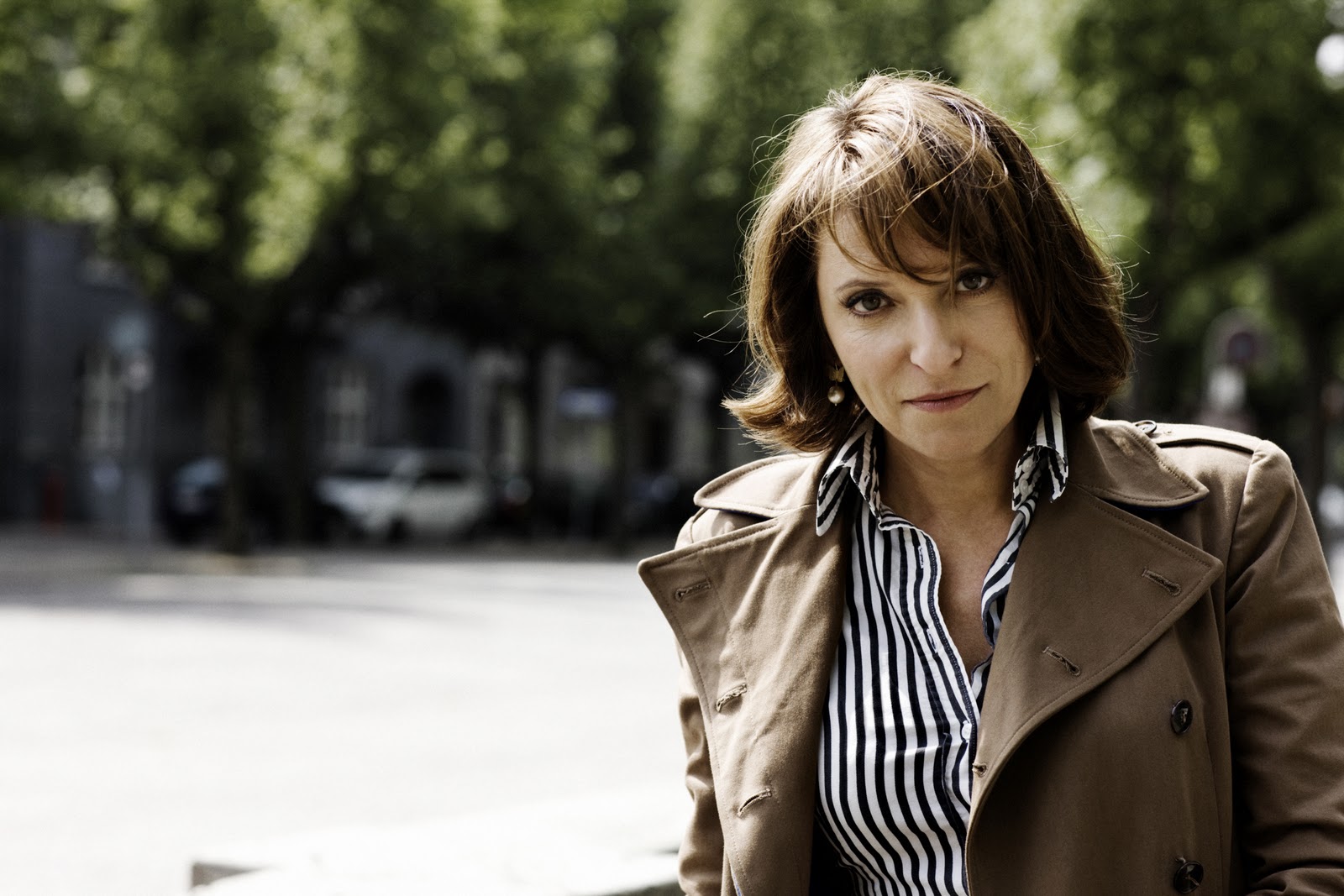
EXCLUSIVE INTERVIEW: SUSANNE BIER

In a Better World director Susanne Bier.
Senseless and sensitivity

By John Esther

Another intense family drama by the director behind Open Hearts, Brothers, After the Wedding and Things We Lost in the Fire, the latest film by Susanne Bier, In a Better World, examines the various levels of tolerance some people will accept before retaliating.

Anton (Mikael Persbrandt) is a doctor working in an African desert camp where girls are often brought in after being cut open by a local warlord named Big Man (Odiege Matthew in a role he seems born to play).

Back home in Denmark, Anton's estranged wife, Marianne (Trine Dyrholm), is trying to raise their son, Elias (Markus Rygaard), a socially misfit kid who gets into a heap of trouble after befriending the new boy in town, Christian (William Jørgennsen), a bitter boy with a chip on his shoulder called Dad (Ulrich Thomsen).

When a plan of attack goes dreadfully awry -- although it could have been much worse -- it becomes clear that mother, father, husband, wife and son need to learn the value of forgiveness in a world riddled with revenge.

Days before In a Better World won the Oscar for Best Foreign Language Film (Denmark) I met up with the Danish director in Beverly Hills. As she moved around on the slippery couch quite a bit, we talked about her latest film.

JEsther Entertainment: Why did you want to make this film, tell these stories?
Susanne Bier: Because I thought it was interesting. I thought the whole thing about revenge and forgiveness seemed like something which sort of creeps upon us in our vocabulary. It's about time to make a movie that dealt with those kinds of things.

JE: Do you think there is a greater thirst for revenge now than in the past? SB: There's a greater acceptance of revenge as a notion. If you look back the past five or six years the notion has become an accepted term.

JE: Worldwide? In particular places?
SB: In the Western World, yes. It's very hard for me to say what it's like in Asia.

JE: What kind of political intentions did you have behind making In a Better World?
SB: I don’t think I had political intentions. I had intentions dealing with ethic or moral issues. I very consciously did not deal with political things. This film deals with moral issues: the whole issue of revenge and forgiveness; the whole notion of violence and non-violence; and the whole ideal about being a decent human being and what that implies. I didn’t want to set it in a definite political context or religious context either. That way we could keep the universality of the moral issues.

JE: Do you think Anton has the right response in these situations, incidences where people are seeking revenge?
SB: I don’t think he has a correct or non-correct response. He's trying hard to remain stoic upon what he believes is right and, like all of us, at some point he has a breaking point. His breaking point is an interesting point because that's where you as an audience feel, "Oh great, we got rid of this guy. We don’t want Big Man to go around doing the sort of atrocities we know he's going to be doing. Once he's well he's going to go out and cut up stomachs of small pregnant girls." You don’t want him to be able to do that so there's a strange sense of relief at the same time you clearly realize Anton is feeling defeated.

JE: Big Man's death is a self-defense mechanism for the "girls of the future."
SB: You can say that. I'm not sure that's the correct mechanics, but you can say that.

JE: How do you deal with your thirsts for revenge? How do you negotiate that energy into something else?
SB: The way we feel offended in everyday life and the way we want to deal with feeling offended is usually pretty easy to deal with. Unless you've been exposed to real atrocities, it's hard to predict your capability to deal with them. As a general rule I do believe in forgiveness. All adult human beings know that the spiral of revenge is terribly tragic.

JE: A lot of your films deal with tragedy. Is there a reason why you are drawn to characters with intense internal conflicts that manifest themselves outward?
SB: My movies are dramatic movies. If you look at great dramas, they are pretty violent, pretty powerful. There's been a particularly European tradition of being withheld and sort of subdued by your scale of dramatic expression and I don’t really believe in that. I actually believe in telling the stories with a lot of emotion. You're probably much more capable of reaching an audience if you feel you've got an important story or if you feel you have something in your heart which you think is important to convey.

JE: Do you see your films as a response to the lack of intensity in European drama?
SB: You don’t make sort of intense movies because you think other movies are boring. You make movies because you think this particular story is right. When I get the criticism of my movies being incredibly dramatic, I kind of go, "Yes, great. Thank you," even if it's not meant that way. I actually happen to think it's great.

JE: I was not posing it as a criticism –
SB: No, I know you were not.

JE: Do people actually criticize your films for being too dramatic?
SB: Actually it's interesting here, because I'm Danish, my movies are sort of "art house." In Europe I'm so mainstream, that I'm not entirely accepted among certain movie circles in Europe. I'm quite pleased with that. I mean, if you think moviemaking is about talking to two people in a very sophisticated cinema, far away from everything, be my guest. I just don’t believe it. I actually believe in making accessible movies with real content.

JE: Now that you say that, when I was at Sundance in January (where In a Better World screened), I was sitting around with a few Scandinavian filmmakers and there was a surprisingly intense debate over your films.
SB: Yeah.

JE: What do you think about the film's Oscar nomination?
SB: I'm very happy. I'm very proud. I get to wear a long dress.

JE: Do you think the Oscars usually get it right with the winners?
SB: Nobody gets it right always. I do tend to like the Oscar movies.

JE: They are usually dramas.
SB: [Laughs]. Yeah. Sometimes certain comedic performances do not get appreciated because they are comedic performances. And those can be the most difficult to put out. So tell me about this Sundance Scandinavian discussion. I think that's very interesting.

JE: Some thought you were too commercial. They thought your Oscar nomination came through name recognition since you had done Things We Lost in the Fire (with Halle Berry) and Brothers was adapted into English (withTobey Maguire). Others did not see how being commercial was a bad thing. And how could your films be so commercial since they were so intense? There were fans for Sweden's Simple Simon, which did not make the cut.
SB: Okay.

JE: You are also one of the few female filmmakers consistently working. Do you see progress for women trying to make it in this business?
SB: It's probably a bit easier, but society still places a big emphasis on women having to choose between their careers and having children. Society should change that. It's a huge pressure on younger women.

JE: Lastly, what do you think of these interviews where you discuss yourself and your work? Does it serve the film? Should the work speak for itself?
SB: That's a very theoretical question. Yes, I would prefer for my work to speak for itself, but that's not the reality. The reality is that I need to generate interest. If you are serious about your work, this is just as an important part as shooting the film.

JE: Do you read interviews with other directors?
SB: Sometimes. In Europe, particularly, directors can be very pretentious. That doesn’t make me terribly keen to see a film. I'm very sensitive to the education of a particular project. If I read a director, and the director seems sincerely dedicated, it is going to make me interested.